


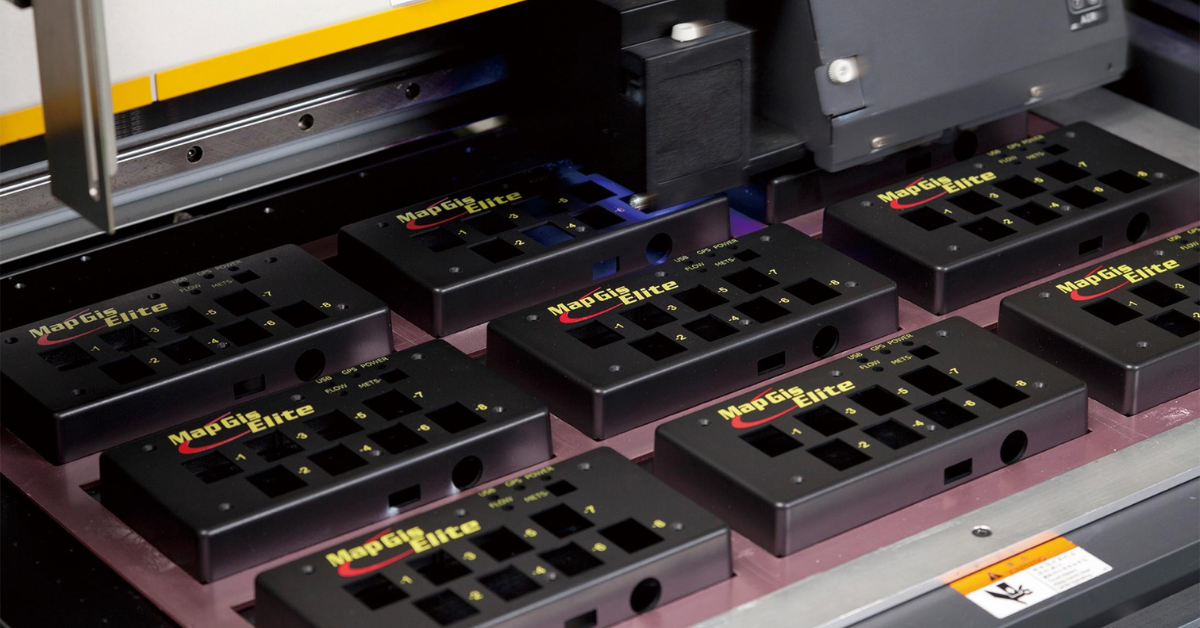
Quick answer: TROY identified two reliable ways to get strong UV ink adhesion on ABS plastic, plasma treatment and precoating with TROY fluorescent blue ink. Both passed adhesion, scratch resistance, and chemical resistance testing. They're not interchangeable: plasma treatment can warp or deform the substrate at the settings used, while precoating avoids that risk but adds a visible colored layer. Printing directly onto untreated ABS, with no preparation, did not pass adhesion testing, which is typical of most UV ink on this substrate without a prepared surface.
ABS shows up constantly in housings, enclosures, and molded components. TROY's testing found two reliable paths to strong, lasting adhesion on it, and a real difference in risk between them worth knowing before picking one.
Getting there takes a preparation step either way. ABS needing help to accept ink isn't a TROY-specific limitation, it's true of most UV ink on this substrate without some form of surface treatment.
Direct Printing Didn't Just Fail Adhesion, It Showed Up in the Print Itself
Ink printed straight onto untreated ABS failed adhesion testing, falling well short of TROY's standard. That part isn't unusual, plenty of plastics need help to pass adhesion.
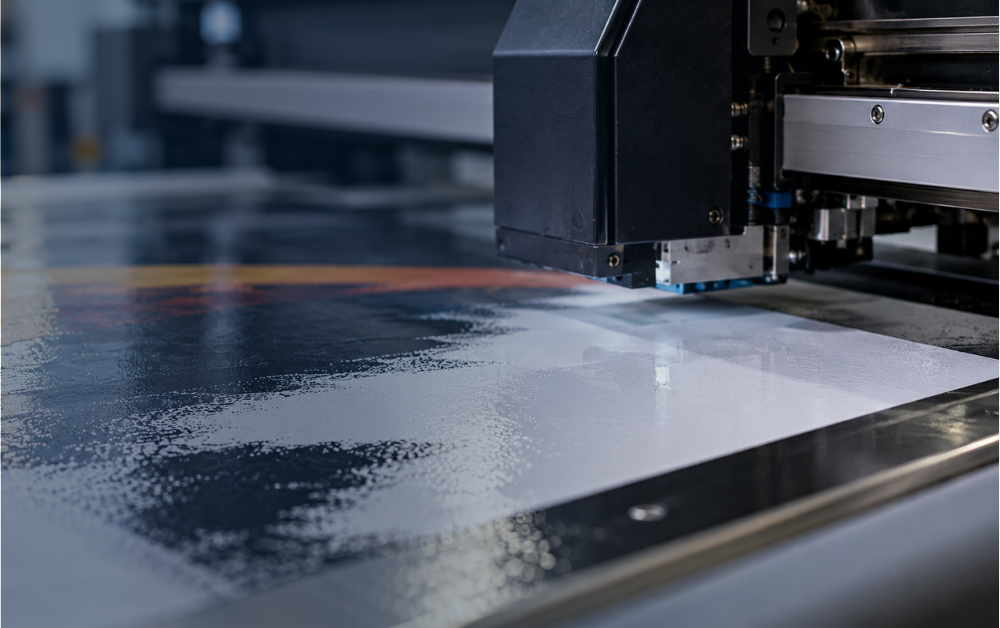
What's worth noting is that the problem showed up before adhesion testing even started. The print itself had visible defects, described as the ink wisping across the surface while printing, consistent with the ink and the substrate's surface energy not being compatible. On some plastics, a print can look clean and still fail adhesion underneath. Here, the surface mismatch was visible immediately.
Plasma Treatment Fixed Adhesion, and Introduced a Different Problem
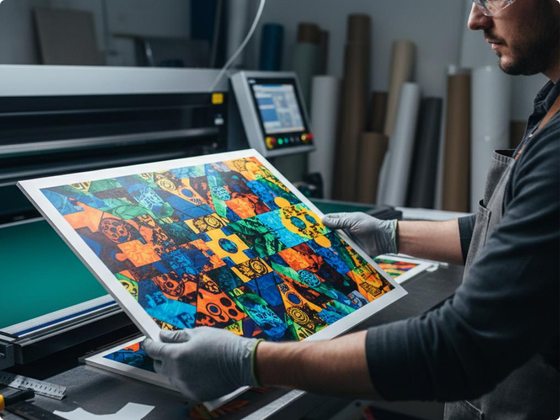
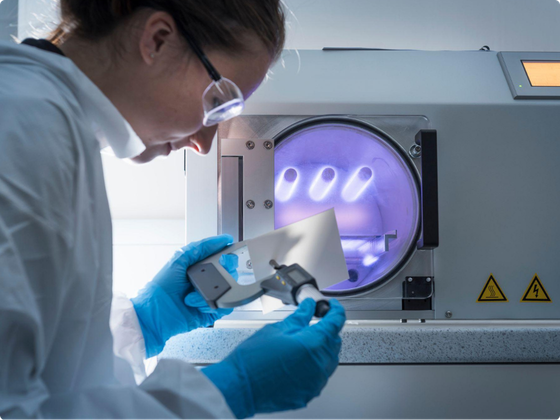
A second sample was plasma treated before printing. Adhesion improved dramatically, passing at the high end of TROY's scale, and scratch resistance and chemical resistance both passed as well.
The lab's own notes flag a real caveat alongside that result: plasma treatment at the settings used in this test can warp or deform ABS. This isn't a minor footnote. It means a treatment that solves the adhesion problem can create a different one, physical damage to the part, if it isn't carefully controlled for the specific geometry and thickness involved.
Precoating Fixed Adhesion Without That Risk
A third sample was printed over a layer of TROY fluorescent blue ink, applied first as an undercoat, with the color print on top. This sample also passed adhesion, along with scratch and chemical resistance testing, and without the physical risk that came with plasma treatment.
Between the two approaches that worked, this one carries less downside based on what was tested. It doesn't touch the part's dimensional stability the way plasma treatment can.
It comes with its own tradeoff, though. The undercoat is a visible, colored layer, not an invisible primer, and it changes the look of the finished part. It fits applications where the print sits against an opaque background. It's not a fit for anything relying on seeing through or around the base material.
What This Means for an ABS Application
Direct printing on this substrate isn't a viable path based on this testing. Of the two approaches that worked, plasma treatment and precoating, the right choice depends on the part. A thick, simple, heat-tolerant part may handle plasma treatment without issue. A thinner or more geometrically complex part may be safer with a precoat approach, given the warping risk the lab observed.
Neither approach should be assumed to work without testing the actual part in question. Results here apply to the specific ABS sheet tested, under the conditions in this report.
What Wasn't Tested
This round covered adhesion, scratch resistance, and short-term chemical resistance under lab conditions. It didn't test outdoor exposure, long-term weathering, or how either treatment approach performs over an extended production run.
Considering an ABS Application?
Getting ink to stick to ABS is solvable, but the two solutions that worked here aren't interchangeable, and the part itself should drive which one makes sense.
Frequently Asked Questions
Does UV ink stick to ABS plastic without treatment?
No. Direct printing on untreated ABS failed adhesion testing, and the print showed visible surface defects consistent with a surface energy mismatch.
Does plasma treatment fix the problem?
It fixed adhesion in testing, passing well above TROY's standard. It also carries a real risk: the lab noted plasma treatment at the settings used can warp or deform ABS, so it needs to be evaluated against the specific part's geometry and thickness, not applied as a default.
Is precoating a safer option?
Based on this testing, yes. Precoating with TROY fluorescent blue passed adhesion, scratch, and chemical resistance without the warping risk seen under plasma treatment. The tradeoff is visual: the undercoat is a visible colored layer, not an invisible fix.
Which approach should I use?
It depends on the part. A heat-tolerant, simple geometry may handle plasma treatment without issue. A more sensitive or complex part may be a
better fit for precoating. Either way, testing the actual part is the only way to know.
Related Posts
UV Printing on ABS Plastic: Two Paths, One Real Tradeoff
Quick answer: TROY identified two reliable ways to get strong UV ink adhesion on ABS plastic, plasma treatment and precoating with TROY fluorescent blue ink. Both passed adhesion,..
Why Isn't My White Ink Opaque Enough?
Quick answer: Weak white ink opacity is rarely one thing. The most common causes are not enough ink laid down to fully block the substrate, pigment that's settled out of..
Will UV Ink Stick to Metal? What Manufacturers Should Know
Quick answer: Sometimes. UV ink can adhere well to metal, but whether it does depends on the surface (raw, coated, anodized), how that surface was prepped, the cure conditions,..
Leave a Reply