


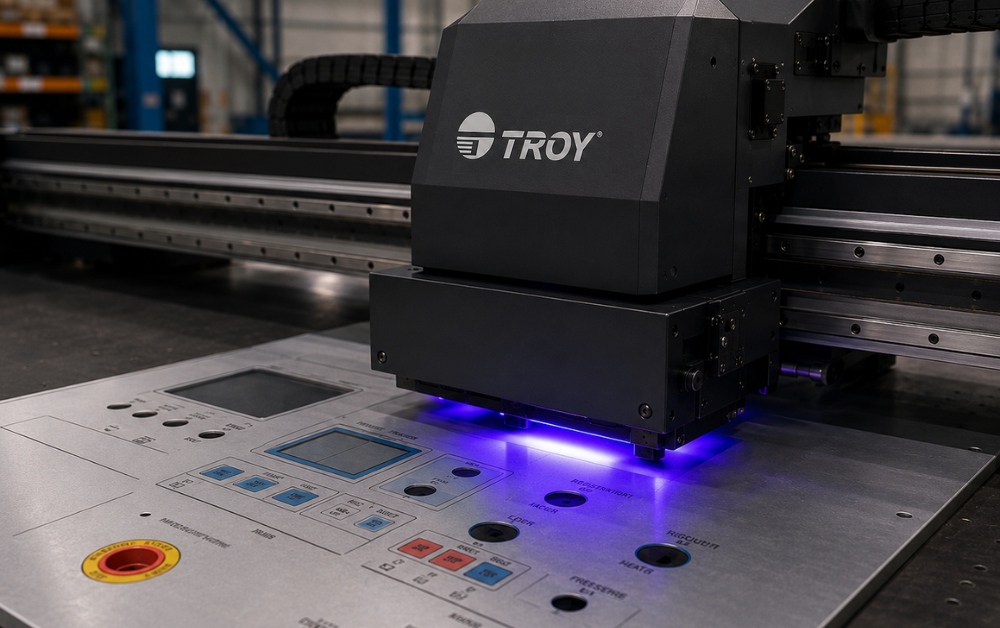
Manufacturers are under constant pressure to produce durable, traceable, and professional-looking products while reducing production costs and eliminating unnecessary process steps.
For many manufacturers, labels, engraving, and chemical etching have long been the standard methods for marking metal components. But these approaches add labor, inventory, and complexity to the production process.
Today, direct to substrate printing offers a faster, more flexible solution.
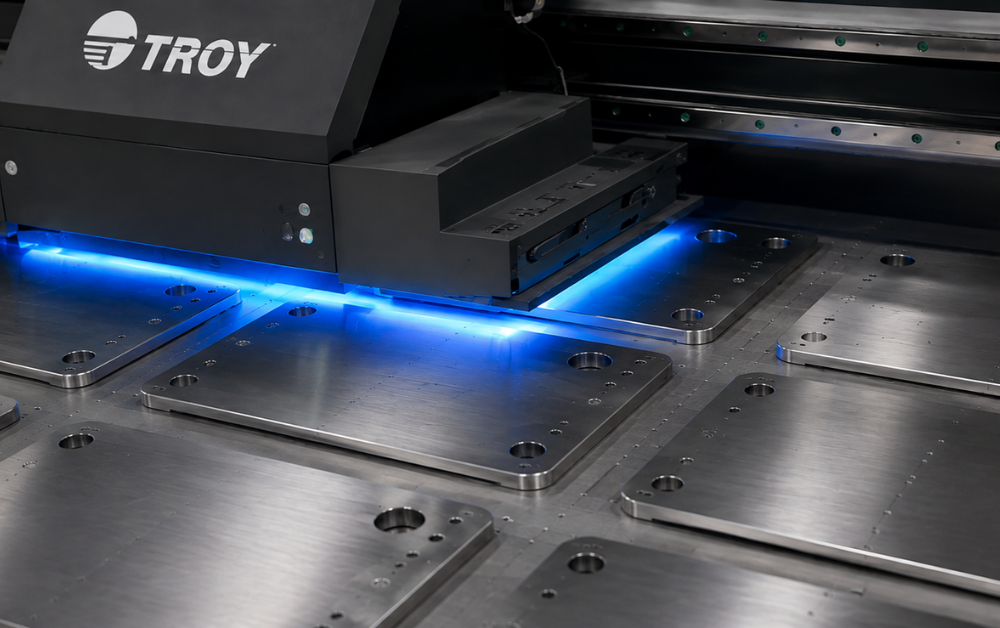
Using a direct-to-substrate UV printer, manufacturers may be able to print directly onto coated metal panels and other difficult substrates when the ink, coating, cure process, and application requirements are properly matched. For many applications, this can reduce reliance on labels, engraving, etching, or other secondary marking processes.
What Is Direct to Substrate Printing?
Direct to substrate printing really just means printing graphics, text, logos, barcodes, serial numbers, warning labels, and variable data directly onto the finished product instead of applying a separate label, etching, or using any third party solution afterward.
It works just how it sounds - direct to substrate printer deposits ink directly onto the surface of the material.
For coated metal, this means manufacturers can print directly onto:
- Electrical enclosures
- Control panels
- Industrial cabinets
- Machine faceplates
- Appliance panels
- Caps and closures
- Equipment covers
- Operator interfaces
- Metal packaging
- Nameplates
- Decorative metal products
Instead of printing labels, storing inventory, and manually applying them later, the printed information becomes part of the manufacturing process itself.
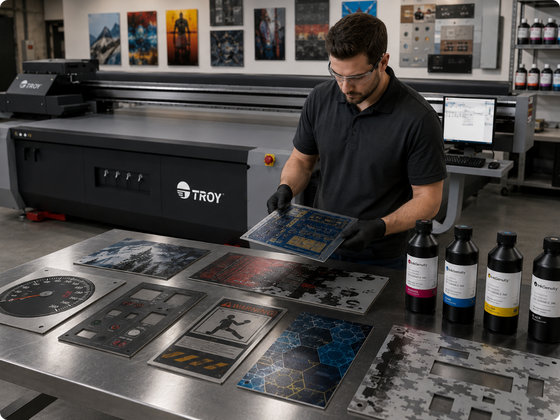
Why More Manufacturers Are Printing on Metal
Labels can peel, wrinkle, or become damaged. Chemical etching requires additional equipment and processing. Engraving increases production costs while limiting flexibility.
A modern direct to substrate UV printer eliminates these challenges by allowing manufacturers to print exactly what they need, exactly when they need it.
Benefits include:
- Eliminate label inventory
- Remove manual label application
- Reduce production steps
- Improve traceability
- Produce full-color graphics
- Print variable information without changing tooling
- Increase production flexibility
- Improve overall product appearance
For manufacturers producing multiple product variations, this flexibility becomes especially valuable.
Why UV Printing on Coated Metal Requires the Right Ink and Application Review
UV printing on metal has become the preferred technology because UV inks cure instantly when exposed to ultraviolet light.
Unlike porous materials, coated metal does not absorb ink. UV ink cures on the coated surface, which means adhesion and durability depend on the coating, surface condition, ink formulation, cure settings, and end-use requirements.
Advantages like:
- Fast UV or LED curing
- High-resolution graphics, text, barcodes, and variable data
- Full-color branding and product decoration
- Reduced label inventory and manual application
- Improved production flexibility
- Application-specific adhesion, scratch, abrasion, or chemical-resistance testing where required
For many manufacturers, UV printing also reduces work-in-progress inventory because finished parts can move directly to the next production step.
Applications for Printing on Metal
Industrial manufacturers are finding new uses for printing on metal every year. Some of the most common applications include:
Industrial Control Cabinets
Electrical cabinets often require branding, safety graphics, operating instructions, and variable identification. Rather than applying multiple labels, manufacturers can print everything directly onto the finished cabinet.
Control cabinets frequently include:
- Button labels
- Safety warnings
- Operating instructions
- Logos
- Model information
A direct to substrate UV printer allows all of this information to be printed in a single operation.
Caps and Closures
Manufacturers of metal caps and closures increasingly rely on UV printing on metal for branding, lot codes, decorative graphics, and variable production information.
When the ink, coating, and cure process are properly matched, UV printing can provide an attractive alternative to labels or secondary decorating processes for select coated-metal applications. Adhesion, durability, and production requirements should be reviewed before scaling.
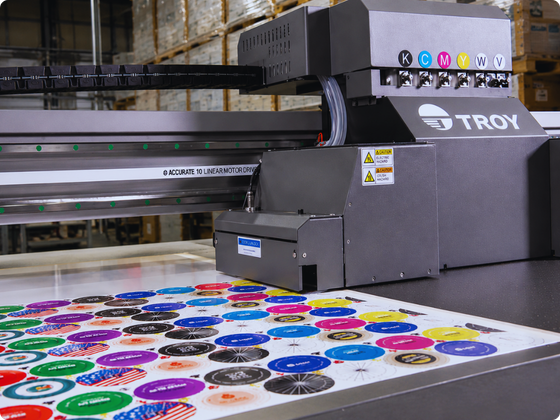
Choosing the Right Direct to Substrate Printer
Not every direct to substrate printer is designed for industrial metal applications.
When evaluating equipment, manufacturers should consider:
-
Print Quality: Look for high-resolution printheads capable of producing fine text, barcodes, and detailed graphics.
-
Bed Size: Choose a printer that accommodates your largest production parts while maximizing throughput.
-
Registration Accuracy: Precise positioning ensures repeatable results for production manufacturing.
-
UV LED Curing: Modern UV LED systems reduce energy consumption while providing instant curing.
-
Ink and Substrate Compatibility: Choose a solution that accounts for the coated surface, ink formulation, cure method, adhesion requirements, and end-use conditions.
Ink chemistry, surface condition, and application requirements often have as much impact on production success as the printer itself.
Is Direct to Substrate Printing Right for Your Operation?
If your production line currently relies on labels, engraving, or chemical etching, direct to substrate printing may offer significant advantages.
Manufacturers often experience:
- Faster production
- Fewer manual processes
- Reduced inventory
- Better product appearance
- Improved traceability
- Lower labor costs
- Greater design flexibility
- Easier customization
For companies producing coated metal products, direct-to-substrate printing may simplify production and improve flexibility when the application is properly qualified. The best results come from evaluating the actual coated surface, production workflow, durability requirements, and business case together.
Experience the Benefits of Direct Printing on Coated Metal
Modern direct to substrate UV printers make printing on metal faster, more efficient, and more flexible than ever before.
Whether you're producing industrial cabinets, machine panels, caps and closures, or other coated metal products, direct printing can help eliminate unnecessary production steps while improving product quality.
At TROY Group, the Prismatix Forge™ Series of flatbed UV printers, paired with InkGenuity™ UV Curable Inks, supports an application-led approach to industrial printing. Our team works with manufacturers to review the substrate, coating, current process, adhesion requirements, durability expectations, and production goals before recommending an ink, equipment, testing, or custom formulation path.
If you are exploring direct-to-substrate printing on coated metal, start with an application review. Send us a production-intent part when possible, along with details about the coating, current process, durability requirements, volume, and timeline. From there, TROY Group can help determine whether sample testing, standard ink, custom formulation, or a complete hardware-and-ink solution is the right next step.
Related Posts
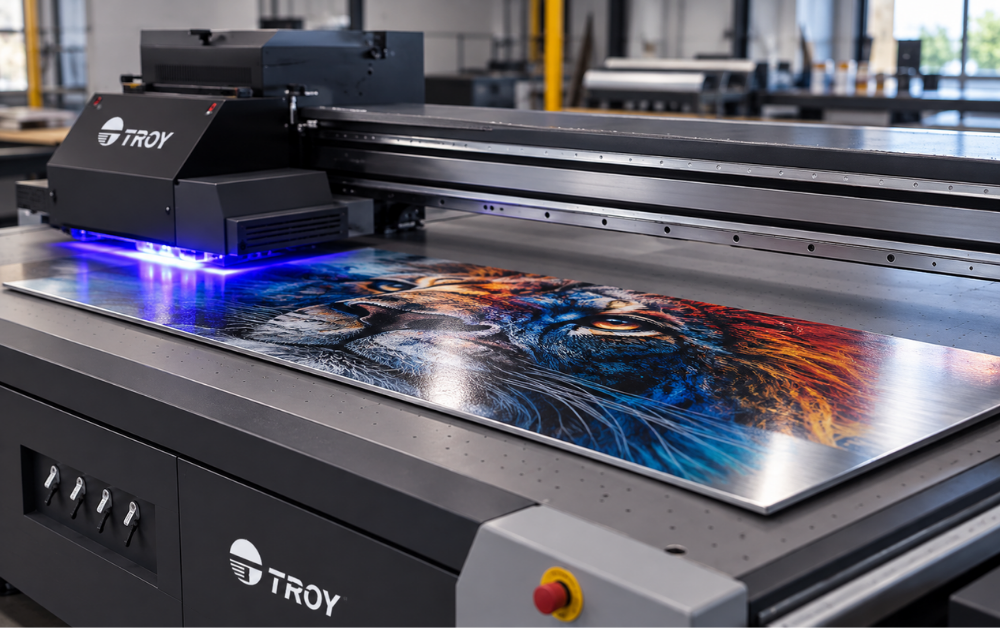
Will UV Ink Stick to Metal? What Manufacturers Should Know
Quick answer: Sometimes. UV ink can adhere well to metal, but whether it does depends on the surface (raw, coated, anodized), how that surface was prepped, the cure conditions,..
How to Prepare for an Ink and Substrate Application Review
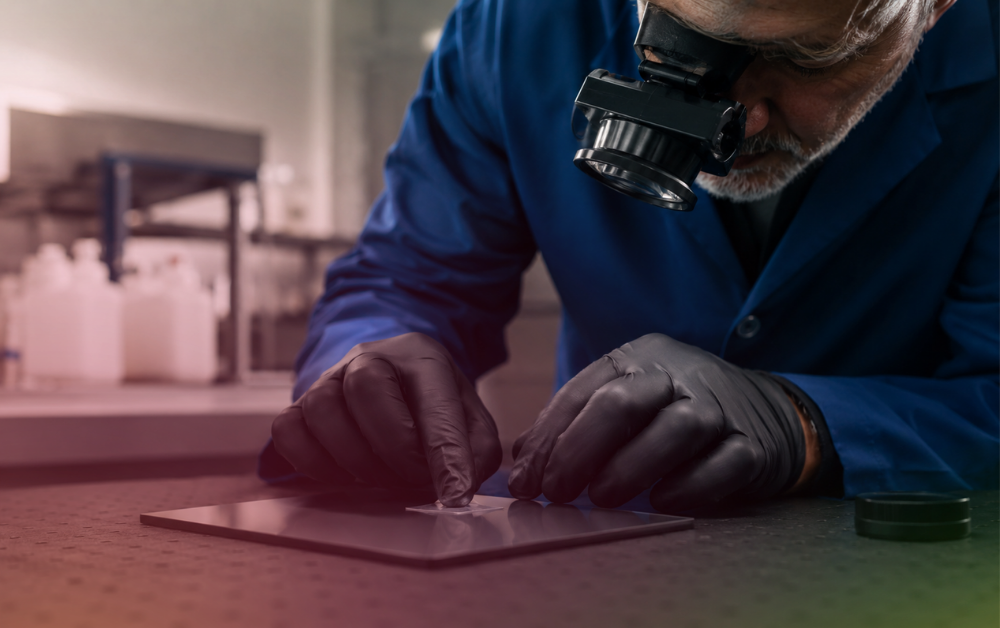
Quick answer: Before asking for an industrial ink recommendation, gather the basics about the job. Know what substrate you're printing on, whether it has a coating or treatment,..
Why UV Ink Adhesion Fails on Difficult Substrates
Quick answer: When UV ink does not stick, there usually is not one simple cause. The problem may start with the surface itself. The ink may not wet it properly because of low..
Leave a Reply