


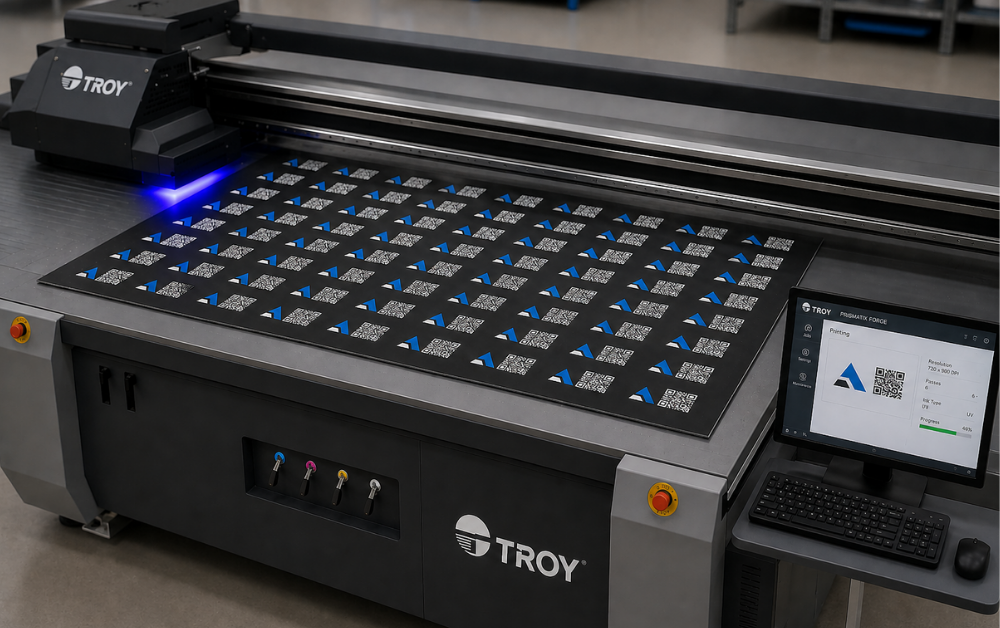
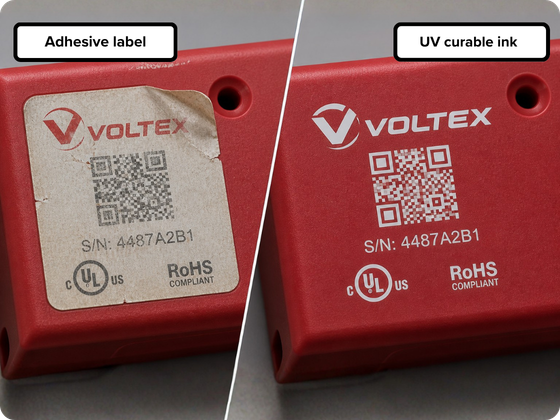
Plastic housings may not mean much to folks who aren't in the industry - but it's crazy how much they're used in every day products, and how much information is on them. Plastic housings are used to cover industrial equipment, medical devices, consumer electronics and telecommunications hardware. Traditionally, manufacturers have relied on labels and stickers to add branding, product information, safety warnings, and serial numbers. However, labels can peel, crack, fade, or fall off over time, creating both aesthetic and operational challenges.
What happens when a customer needs to give a serial number of a certain product to a customer service rep, but its faded? Or, even worse, the sticker that contained the serial number is completely gone?
This is why many manufacturers are transitioning to direct to substrate printing. By printing directly onto plastic housings, companies can create durable, professional-looking graphics that become part of the product itself rather than an applied label.
What Is Direct to Substrate Printing?
Direct to substrate printing is a process that applies graphics, text, barcodes, and variable data directly onto the surface of a finished product. Instead of printing onto a separate label or decal, the image is deposited directly onto the substrate using specialized digital printing technology.
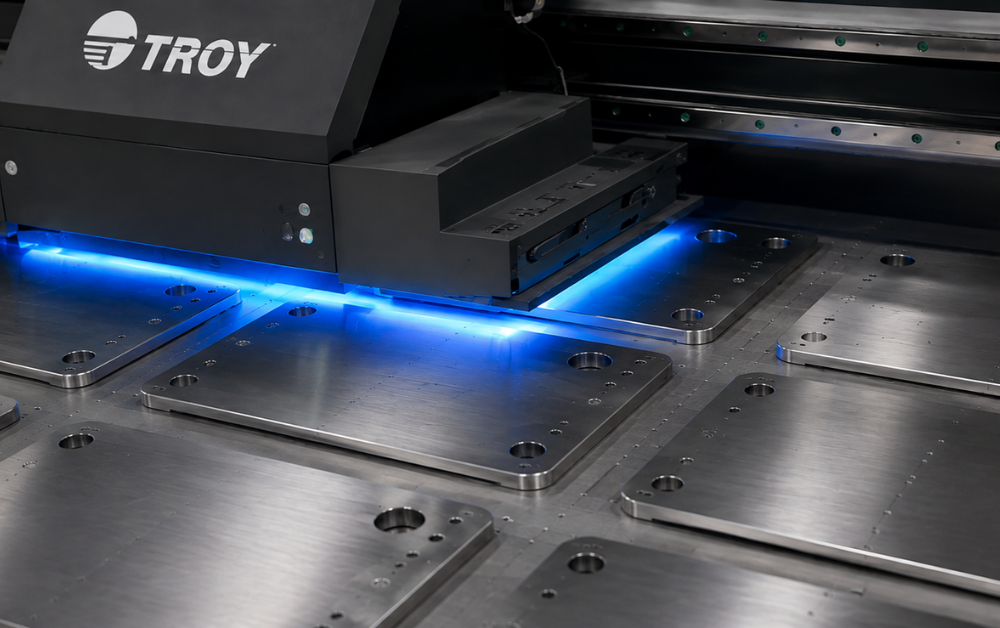
When used on plastic housings, a direct to substrate printer applies UV curable ink directly onto the surface. Integrated UV lamps immediately cure the ink, creating a durable bond that resists wear, scratching, and environmental exposure.
The result is a permanent, high-quality print that eliminates many of the issues associated with traditional labels and stickers.
How Direct to Substrate Printing Works on Plastic Housings
The process begins by placing a plastic housing onto the bed of a UV flatbed printer. The direct to substrate printer precisely deposits UV curable ink onto the surface according to the digital artwork.
As the ink is applied, UV LED lamps instantly cure the ink, transforming it from a liquid into a hardened, durable image. This immediate curing process allows manufacturers to print directly onto finished parts without lengthy drying times.
Common applications include:
- Product logos
- Control panel graphics
- Regulatory markings
- Safety instructions
- Barcodes and QR codes
- Serial numbers
- Asset tracking information
- Custom branding
Because the image is printed directly onto the housing, manufacturers eliminate the need for separate label application processes.
Benefits of Direct to Substrate Printing on Plastic Housings
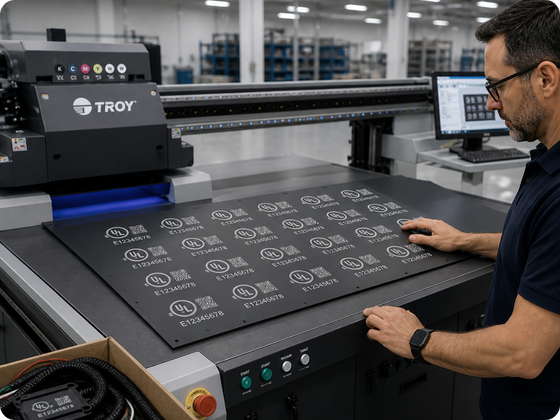
Eliminate Peeling and Falling Labels
One of the most significant advantages of direct to substrate printing is that it removes the need for adhesive labels altogether. Since the graphic is applied directly to the housing, there is no adhesive layer that can fail.
Manufacturers can avoid:
- Peeling corners
- Label bubbling
- Adhesive breakdown
- Stickers falling off during use
Improved Durability and Fade Resistance
The use of UV curable ink creates highly durable graphics that can withstand regular handling and exposure to challenging environments.
Unlike many labels that fade over time, direct printing helps maintain:
- Brand visibility
- Safety information readability
- Barcode performance
- Product appearance
Professional Product Appearance
A product with graphics printed directly onto its housing delivers a cleaner and more premium appearance. The graphics look integrated into the product rather than attached as an afterthought.
Streamlined Production
By eliminating separate labeling operations, manufacturers can reduce labor costs, simplify inventory management, and improve production efficiency.
Variable Data Printing
Modern direct to substrate printers make it easy to add unique information to every product, including:
- Serial numbers
- QR codes
- Asset tags
- Traceability data
- Product identification numbers
Why Prismatix Forge Is an Ideal Direct to Substrate Printer
The Prismatix Forge UV Flatbed Printer Series is designed for manufacturers seeking a reliable direct to substrate printer capable of producing durable, high-quality prints on plastic housings and other rigid materials.
High-Resolution Print Quality
Prismatix Forge printers produce crisp text, detailed graphics, and sharp logos directly on plastic surfaces, helping manufacturers achieve professional results.
Advanced UV Curable Ink Technology
Using high-performance InkGenuity UV curable ink, the Forge platform creates durable graphics that resist fading, scratching, and everyday wear. The instant curing process enables efficient production while delivering long-lasting print quality.
Direct Printing on Plastic Components
Whether printing on enclosures, control panels, electronic housings, or molded plastic parts, Prismatix Forge systems support efficient direct to substrate printing workflows that eliminate secondary labeling operations.
Increased Manufacturing Efficiency
With a single printing process, manufacturers can apply branding, compliance information, and variable data directly to finished products, reducing production complexity and improving throughput.
Scalable Product Identification
Prismatix Forge printers make it easy to add unique product information directly onto plastic housings, supporting modern traceability and inventory management requirements.
Upgrade from Labels to Direct to Substrate Printing
As manufacturers continue to seek more durable and efficient product marking solutions, direct to substrate printing is becoming the preferred alternative to labels and stickers. By printing directly onto plastic housings with UV curable ink, companies can eliminate peeling labels, improve product durability, and create a more professional finished appearance.
With the Prismatix Forge UV Flatbed Printer Series, manufacturers gain access to a powerful direct to substrate printer that delivers long-lasting, high-quality results while streamlining production processes and enhancing product branding.
Related Posts
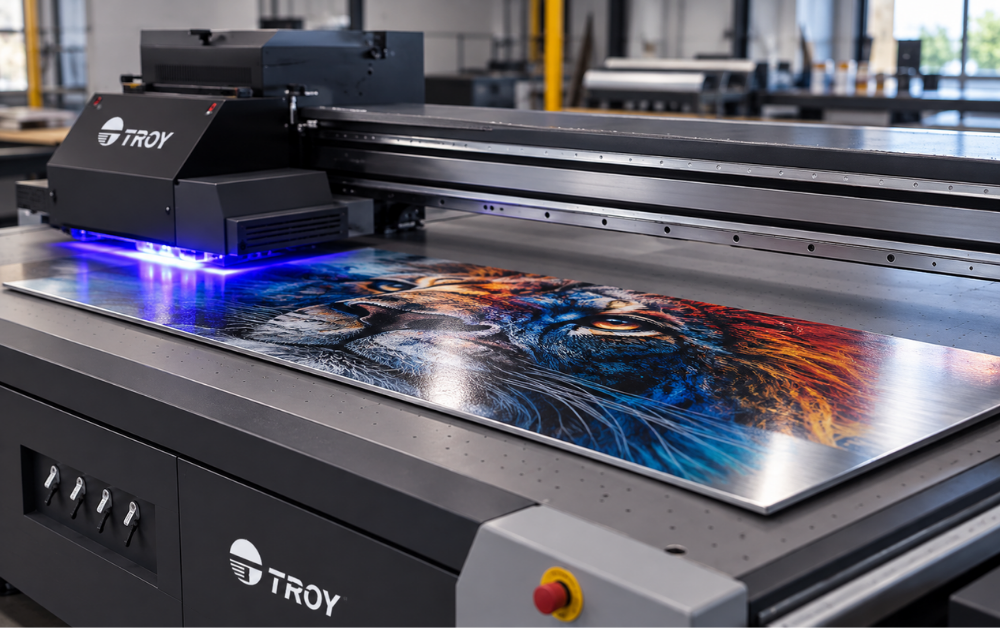
Will UV Ink Stick to Metal? What Manufacturers Should Know
Quick answer: Sometimes. UV ink can adhere well to metal, but whether it does depends on the surface (raw, coated, anodized), how that surface was prepped, the cure conditions,..
How to Prepare for an Ink and Substrate Application Review
Quick answer: Before asking for an industrial ink recommendation, gather the basics about the job. Know what substrate you're printing on, whether it has a coating or treatment,..
Why UV Ink Adhesion Fails on Difficult Substrates
Quick answer: When UV ink does not stick, there usually is not one simple cause. The problem may start with the surface itself. The ink may not wet it properly because of low..
Leave a Reply